|
 |
| Research | Recent Publications | Personnel | Salomon CV | Publicity | Funding |
| Contact Us | Protocols |
|
|
|
| Research | Recent Publications | Personnel | Salomon CV | Publicity | Funding |
| Contact Us | Protocols |
| History and Research Interests |
| The objectives of the group are to understand the role of lipid oxidation
in disease, to develop new diagnostic tools for identifying individuals
at risk and assessing the efficacy of therapeutic interventions, and to
provide a molecular basis for the design of new drugs and strategies for
the prevention or treatment of oxidative injury.
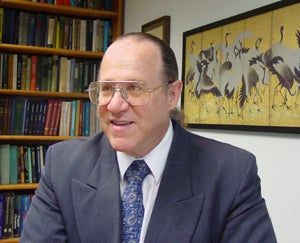
Dr. Salomon did undergraduate studies at the University of Chicago, graduate and postdoctoral studies at the University of Wisconsin, and further postdoctoral studies at Indiana University. In 1973 he joined the faculty of Case Western Reserve University where he is the Charles Fredrick Mabery Professor of Research in Chemistry. |
 |
The
group's research, built on a foundation of physical and synthetic
organic chemistry, bridges chemistry, biology, and medicine.
Previous accomplishments and continuing interest focus on the biologically
important chemistry of lipids.
|
| Facilities, Resources, and Environment |
| The Lipid
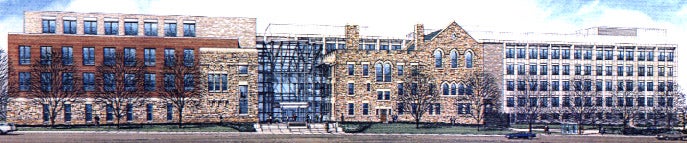
Research Group is based in the Millis Science
Center. The laboratory is named after its distinguished former occupant,
George A. Olah, winner of the 1994 Nobel Prize in Chemistry. An HPLC
area has UV, fluorescence, refractive index, and evaporative light scattering
detectors. A hot room for radiochemical experiments has both stand-alone
and flow-through (for HPLC) liquid scintillation counters. Two cell culture rooms, one for bacteria and one for mammalian cells, are equipped with laminar flow hoods, incubators, centrifuges, a thermocycler, microscope, electrophoresis, and cryostorage equipment. The Lipid Research laboratories are well equipped for immunological studies (multiwell plate scanner, incubators),
organic synthesis, tissue and cell fractionation (ultracentrifuge), and
kinetics (temperature controlled UV-visible). Shared departmental
instrumentation is extensive.
Strong collaborative interactions with biomedical researchers in the CWRU School of Medicine and at the Cleveland Clinic Foundation provide opportunities for students in the group to perform sophisticated mass spectroscopic (LC-MS, MALDI-TOF, Q-TOF), cell culture, and animal studies, and to conduct clinical investigations on human subjects. |
| Home | Research | Publications | Personnel | Salomon CV | Publicity | Funding |