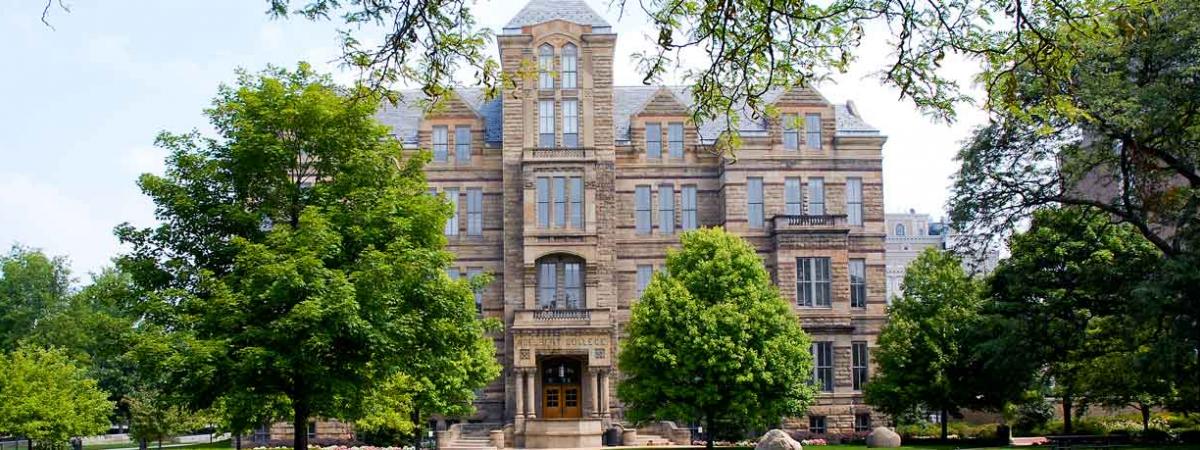
Faculty

Handbook


A handbook for the members of the University Faculty, as defined in the “Constitution of the University Faculty”


Summer 2006


Case Western Reserve University


Office of the President August 2006


Table of Contents


Table of Contents......................................................................................................................................................... 2

Introduction.................................................................................................................................................................. 7

Chapter 1....................................................................................................................................................................... 8

A brief history of Case Western Reserve University................................................................................................ 8

Chapter 2..................................................................................................................................................................... 12

Organization and Constitution of the Faculty.......................................................................................................... 12

Introduction............................................................................................................................. 13

Preamble................................................................................................................................ 14

ARTICLE I.  MEMBERSHIP OF THE UNIVERSITY FACULTY..................................................... 14

Sec. A. Tenured or tenure-track faculty members.......................................................................................... 14

Sec. B.  Non-tenure track faculty members..................................................................................................... 14

Sec. C.  Special faculty members..................................................................................................................... 14

Sec. D.  Majority of appointments shall be tenured or tenure track.............................................................. 14

Sec. E. Members ex officio.............................................................................................................................. 14

Sec. F.  List of members of the University Faculty........................................................................................ 15

ARTICLE II.  OFFICERS OF THE UNIVERSITY FACULTY......................................................... 15

Sec. A. Chair....................................................................................................................................................... 15

Sec. B. Vice Chair.............................................................................................................................................. 15

Sec. C. Secretary................................................................................................................................................ 15

ARTICLE III.  AUTHORITIES AND POWERS OF THE UNIVERSITY FACULTY............................ 15

Sec. A. Authorities............................................................................................................................................. 15

Sec. B. Powers Reserved................................................................................................................................... 15

ARTICLE IV.  MEETINGS OF THE UNIVERSITY FACULTY........................................................ 15

Sec. A. Annual Meeting..................................................................................................................................... 15

Sec. B. Special Meetings................................................................................................................................... 15

Sec. C. Emergency Meetings............................................................................................................................ 15

Sec. D. Notification and Agenda....................................................................................................................... 15

Sec. E. Quorum and Rules of Order................................................................................................................. 15

ARTICLE V.  THE FACULTY SENATE...................................................................................... 16

Sec. A. Purpose and Functions.......................................................................................................................... 16

Sec. B. Meetings................................................................................................................................................ 16

Sec. C. Membership........................................................................................................................................... 16

Sec. D. Privilege of Attendance........................................................................................................................ 17

Sec. E. Officers.................................................................................................................................................. 17

Sec. F. Apportionment, Election, Term of Office, and Vacancies................................................................ 17

Sec. G. Annual Report....................................................................................................................................... 18

ARTICLE VI.  COMMITTEES OF THE FACULTY SENATE.......................................................... 18

Sec. A. Executive Committee........................................................................................................................... 18

Sec. B. Nominating Committee........................................................................................................................ 18

Sec. C. Budget Committee................................................................................................................................ 18

Sec. D. Committee on Graduate Studies.......................................................................................................... 19

Sec. E. Other Standing Committees................................................................................................................. 19

Sec. F. Ad hoc Committees............................................................................................................................... 19

Sec. G. Multipartite Committees and Commissions...................................................................................... 19

ARTICLE VII.  THE STRUCTURE OF THE UNIVERSITY FACULTY............................................. 19

Sec. A. Constituent Faculties............................................................................................................................ 19

Sec. B. Departments.......................................................................................................................................... 20

Sec. C. Graduate Programs............................................................................................................................... 20

Sec. D. University Undergraduate Faculty....................................................................................................... 20

ARTICLE VIII.  INITIATIVE AND REFERENDUM....................................................................... 21

Sec. A. Initiative................................................................................................................................................. 21

Sec. B. Referendum........................................................................................................................................... 21

ARTICLE IX.  AMENDMENT..................................................................................................... 21

ARTICLE X.  RATIFICATION.................................................................................................... 21

Chapter 3..................................................................................................................................................................... 22

Policies and Procedures for the Members of the Faculty...................................................................................... 22

INTRODUCTION...................................................................................................................... 23

Ethics in the University*........................................................................................................... 23

PART ONE.............................................................................................................................. 24

Introduction............................................................................................................................. 24

I. Appointments, Reappointments, Resignations, Promotions, and Tenure* **............................... 24

A.  Notices of Appointment.............................................................................................................................. 24

B.  Classifications of Appointment*................................................................................................................ 24

C.  Terms of Appointment................................................................................................................................. 26

1.  Duration of Appointment........................................................................................................................ 26

2.  Salary........................................................................................................................................................ 26

3.   Fringe Benefits....................................................................................................................................... 26

4.   Special Responsibilities......................................................................................................................... 27

D.   Academic Freedom..................................................................................................................................... 27

E.  Tenure............................................................................................................................................................ 27

F.  Qualifications and Standards for Appointments, Reappointments,         Promotions, and Tenure........ 28

G.   Pretenure Period......................................................................................................................................... 30

H. Appointments Beyond the Pretenure      Period........................................................................................ 30

I.    Initiation of Recommendations.................................................................................................................. 30

J.  Review and Decision..................................................................................................................................... 31

K.  Non-Renewal of Term Appointments........................................................................................................ 32

II. Leaves of Absence*............................................................................................................. 33

A.  Sabbatical Leaves......................................................................................................................................... 33

B.  Other Leaves of Absence............................................................................................................................. 34

C.  Status While on Leave................................................................................................................................. 34

D.   Obligation to Return................................................................................................................................... 35

III. Non-University Activities of Faculty Members During the Contractual Period*.......................... 36

IV.  Professional Responsibilities*............................................................................................. 36

A.  Introduction.................................................................................................................................................. 36

B.  General Standards......................................................................................................................................... 36

C.       Specific Standards................................................................................................................................. 37

D.  Hearing Procedures..................................................................................................................................... 38

1.  Initiation of Procedures.......................................................................................................................... 38

2.  Decision for a Formal Hearing............................................................................................................... 38

3.  Selection of the Hearing Panel............................................................................................................... 38

4.  Conduct of the Hearing........................................................................................................................... 39

5.   Report of the Hearing Committee........................................................................................................ 40

6.  Decision by the President....................................................................................................................... 40

V. GRIEVANCE PROCEDURES*.............................................................................................. 40

A.  Introduction.................................................................................................................................................. 40

C.  Formal Grievance Procedures.................................................................................................................... 41

1.   Scope of Procedures.............................................................................................................................. 41

2.   Complaint................................................................................................................................................ 41

3.   Selection of the Hearing Committee.................................................................................................... 41

4.  Conduct of the Hearing........................................................................................................................... 42

5.   Failure to respond to complaint............................................................................................................ 43

6.   Commencement or pendency of litigation or external administrative proceeding.......................... 43

7.   Report of the Hearing Committee........................................................................................................ 43

8.   Decision by the President...................................................................................................................... 44

PART TWO............................................................................................................................. 44

I.  University Policies on Research and Scholarship................................................................... 44

A.  Case Western Reserve University Intellectual Property Policy*........................................................... 44

Preamble........................................................................................................................................................ 44

1.   Intellectual Property............................................................................................................................... 45

2.   Objectives of the Policy........................................................................................................................ 45

3.   General Provisions................................................................................................................................. 45

4.   Distribution of Rights............................................................................................................................ 46

5.   Disposition of University Rights.......................................................................................................... 47

6.   Maximizing Commercial Potential of Intellectual Property.............................................................. 47

7.   Division of Income................................................................................................................................. 48

8.       Intellectual Property Created by Staff Within Scope of Employment......................................... 48

9.       Release to Creator of University-Owned Intellectual Property................................................... 48

10.     Individual Agreements...................................................................................................................... 49

11.     Student Materials.............................................................................................................................. 49

12. Role of Faculty Committee................................................................................................................... 49

B. University Policy on Human Research Protection**................................................................................ 49

1.   Ethical Principles and Regulatory Mandates........................................................................................ 50

3.   Informed Consent................................................................................................................................... 50

4.   Privacy and Confidentiality of Data...................................................................................................... 51

5.   Investigator Non-compliance................................................................................................................ 51

6.   Submitting Research to an Institutional IRB under the FWA............................................................. 51

7.   Types of Review...................................................................................................................................... 51

8.  Faculty Advisors are Responsible for Student Research..................................................................... 52

9.  International Research............................................................................................................................. 52

C.  University Guidelines on Authorship and Policy on Copyright*............................................................. 52

1.   Introduction............................................................................................................................................. 52

2.   University Guidelines on Authorship of Research and Scholarly Publications**........................... 53

3.  Relationship of the Author and the University...................................................................................... 54

4.   Role of the University Advisory Committee on Copyright................................................................ 55

5.   Implementation of the Policy................................................................................................................ 56

D.  University Policy on Equipment Transfer*............................................................................................... 58

E.  Guidelines, Technology Transfer Operations Involving Non-University Personnel on University Premises*........................................................................................................................................................... 59

II.  Policy for Responding to Allegations of Research misconduct*............................................... 60

III. Remuneration for Additional Services*................................................................................. 72

IV. Modified Employment Policy for Full-Time University Faculty*................................................ 72

V. Retirement*......................................................................................................................... 73

VI. Emeritus Appointment*....................................................................................................... 73

VII. Endowed Professorships and other Chairs*......................................................................... 73

VIII. Guidelines for Selecting Deans*........................................................................................ 74

IX. Guidelines for Selecting Department Chairs*........................................................................ 74

X. Guidelines for Awarding Honorary Degrees*......................................................................... 75

XI. University Medal*............................................................................................................... 75

Chapter 4..................................................................................................................................................................... 76

General University Policies and Procedures........................................................................................................... 76

INTRODUCTION...................................................................................................................... 77

I.  Rules of Conduct*............................................................................................................... 77

II.  Guidelines for the Use of University Facilities by Individuals and External Groups*................... 77

A.  In General...................................................................................................................................................... 77

B.  Student Groups and Campus Organizations............................................................................................... 78

C.  Political Issues and Activities..................................................................................................................... 78

D.  Commercial and Personal Use of University Equipment......................................................................... 79

III.   Use of University Funds--Operational Policies and Practices*.............................................. 79

IV. Fringe Benefits Program..................................................................................................... 79

V.  Travel and Related Items..................................................................................................... 80

VI. Academic Integrity Standards for Graduate Students*........................................................... 80

PREAMBLE....................................................................................................................................................... 80

B.       Reporting Suspected Violations........................................................................................................... 81

C.       Notice of Charges................................................................................................................................. 82

D.  Notice of Hearing........................................................................................................................................ 82

E.  Academic Integrity Board and Hearing Procedures.................................................................................. 82

F.       Sanctions................................................................................................................................................ 83

G.       Appeal Process...................................................................................................................................... 86

H.       VIOLATIONS REPORTED AFTER VOLUNTARY WITHDRAWAL OR ACADEMIC SEPARATION.................................................................................................................................................... 86

I.        VIOLATIONS REPORTED AFTER GRADUATION......................................................................... 86

J.        MAINTENANCE OF RECORDS......................................................................................................... 87

VII. Acceptable Use of Computing and Information Technology Resources*................................. 87

*approved by the Faculty Senate 2/24/04.................................................................................. 88

VIII. Conflict of Interest Policy and Procedures*........................................................................ 88

IX.         Copyright Compliance Policy*.................................................................................... 89

1. Policy Statement............................................................................................................................................ 90

2. Copyright Background and Importance as Federal Law............................................................................. 90

3. Copyright Defined......................................................................................................................................... 90

5.  Damages For Copyright Infringement........................................................................................................ 91

6. Copyright Registration.................................................................................................................................. 91

7. Copyright Exclusive Rights.......................................................................................................................... 91

8. Term Limits of Copyright Protection.......................................................................................................... 92

Using Copyrighted Works Without Permission–The Public Domain............................................ 92

When Works Pass Into the Public Domain6.......................................................................................... 92

9. Copyright Exemption.................................................................................................................................... 93

10.  Technology and Copyright in the Digital Environment........................................................................... 94

A. Digital Millennium Copyright Act (DMCA)................................................................................... 94

B. Copyright and Distance Education.................................................................................................... 95

11. Using Copyrighted Works–Seeking Permissions.................................................................................... 96

Appendix A. Checklist For Fair Use...................................................................................................... 97

Appendix B. TEACH Act Checklist......................................................................................................... 98

Appendix C. Exemptions to §1201 (DMCA)......................................................................................... 99

Appendix D. Other Exemptions-Statutes............................................................................................... 99

Appendix E. When Works Pass Into the Public Domain.................................................................... 99

Appendix F. Resources............................................................................................................................ 100

X. Equal Opportunity Policy*.................................................................................................. 101

XII. Title IX............................................................................................................................ 104

XIV. Sexual Harassment*....................................................................................................... 105

A.  Laws Governing Sexual Harassment........................................................................................................ 105

B.  Definitions.................................................................................................................................................. 106

C.       Responsibilities of the University Community................................................................................ 106

D.       Confidentiality..................................................................................................................................... 107

E.       False Claims of Sexual Harassment.................................................................................................. 107

F.        Annual Report...................................................................................................................................... 107

XV.        The Disabled........................................................................................................... 110

XVI.       Affirmative Action for Disabled Veterans and Veterans of the Vietnam Era.................... 110

XVII.      Religious Holidays and Student Absences.................................................................. 111

XVIII.     Safety of Life and Property....................................................................................... 111

A.  Occupational Injury and Illness................................................................................................................. 111

B.  Workers’ Compensation Insurance.......................................................................................................... 111

C.  Laboratories and Training.......................................................................................................................... 111

XIX.       Liability Protection for Case Employees..................................................................... 111

General Statement of Policy.......................................................................................................................... 111

Procedure for Determinations of Indemnification....................................................................................... 111

Examples of Factors to be Considered.......................................................................................................... 112

Notification...................................................................................................................................................... 112

XX. Security/Emergency Procedures...................................................................................... 112

Chapter 5................................................................................................................................................................... 113

Facilities and Services............................................................................................................................................. 113

LIBRARIES*.......................................................................................................................... 114

Kelvin Smith Library (KSL) (http://library.case.edu/).............................................................................. 114

The Kulas Music Library.................................................................................................... 114

The Astronomy Library...................................................................................................... 114

The Retrospective Research Collections Center (RRCC)...................................................... 114

Library Catalog (http://catalog.case.edu/)................................................................................................... 114

OhioLINK Services......................................................................................................................................... 115

Loan Periods.................................................................................................................................................... 115

Interlibrary Loan Services............................................................................................................................... 115

Course Reserves.............................................................................................................................................. 116

Reference Services.......................................................................................................................................... 116

Faculty Librarian Liaisons.............................................................................................................................. 116

CASELearns Education Classes..................................................................................................................... 116

Library Homepage (http://library.case.edu)................................................................................................ 116

Additional libraries support graduate and professional programs:.............................................................. 116

Cleveland Health Sciences Library (http://www.case.edu/chsl/homepage.htm)........................ 116

School of Law Library (http://www.law.case.edu/tech_library/).............................................. 117

The Lillian F. and Milford J. Harris Library (http://msass.cwru.edu/library/)............................ 117

INFORMATION TECHNOLOGY SERVICES  (http://www.case.edu/its)*...................................... 117


Introduction


The Case Western Reserve University Faculty Handbook has been prepared for the members of the University Faculty, as defined in the “Constitution of the University Faculty” (Chapter 2, Article I, Membership of the University Faculty). The policies and procedures contained herein remain in effect until such time as they are amended through regular university procedures.


Additional information is included in this handbook on general university policies and procedures that apply to all members of the university community--administrators, staff, students and faculty--(Chapter 4), and on academic and other services and facilities (Chapter 5) of interest to the university community.


Throughout this volume, sections indicated by an asterisk (*) are university policies that were approved and adopted by the Board of Trustees on the date shown. Where relevant, other policies and procedures have also been identified by source and date of adoption.


All material set forth or referred to in this handbook is current as of June, 2004. Changes are made from time to time through regular university procedures.


As part of the adoption of the "Policies and Procedures for the Members of the Faculty of Case Western Reserve University" in 1973, the Board of Trustees in its official document stated, "Each constituent faculty that includes faculty members who are not regular full-time members should establish appropriate procedures and policies for such faculty." Prior to the restructuring of the University Faculty that occurred in 2003, faculty members who were not regular full-time faculty included, among others, individuals holding adjunct appointments, clinical appointments, visiting appointments, and lecturer appointments.  As part of the changes in 2003, a new category of University Faculty was created and called “special faculty,” which covers those types of appointments.  Special faculty are now covered by the provisions of the Faculty Handbook, unless specifically excluded.  If they are excluded from a particular provision, the by-laws of the constituent faculty in which their appointment resides may address that subject. 


Chapter 1 

A brief history of Case Western Reserve University


On July 1, 1967, Case Western Reserve University was created by action of the Trustees of Case Institute of Technology and Western Reserve University.  The new university inherits the traditions of two independent institutions, connected over the years by personal and corporate relationships and by location.


Both institutions had deep roots in the traditions of the Western Reserve of Connecticut.  Leonard Case, Sr., who came to Cleveland in 1816, was an agent of the Connecticut Land Company from 1827 to 1855, and an authority on its land titles.  Western Reserve College was founded in 1826 in Hudson by a group of men who had pioneered in this new country.  They were schooled in the New England college tradition and determined to continue that tradition in Ohio so that a new generation of professional men could be educated in the Western Reserve.  Although the early orientation of the college was towards classical education and training for the ministry, there was a strong scientific interest almost from the beginning.  In 1836 the observatory, third in the United States and the first west of the Appalachians, was built, and Elias Loomis was commissioned to spend a year in Europe, studying and purchasing scientific equipment, before he took up residence at the college as Professor of Mathematics and Natural Philosophy.  In 1843, a group of seven physicians, intent on starting a medical school in Cleveland, with Leonard Case, Sr., as Chairman of its Board of Agency, affiliated the school with Western Reserve College as its medical department.  After that time, several faculty members taught at both Hudson and Cleveland, especially in the natural sciences.  In 1826, the founders had refused to consider Cleveland as a location because it was a lake port, full of temptations for the innocent student.  Fifty years later, Cleveland was a flourishing city, determined to have a university, and Western Reserve College -- trustees, faculty, and students -- found Cleveland considerably more acceptable.


The group of Clevelanders who were negotiating with the trustees of the College were encouraged by a sensational news story in January of 1880.  Leonard Case, Jr., scholarly, Yale-educated, heir to Cleveland's first great fortune, had left a substantial portion of it to found a scientific school.  Representatives of the new Case School of Applied Science and of Western Reserve College met to discuss the possibility of sharing a tract of land to be purchased for their use by public subscription.  The trustees of Case decided that ". . . very many advantages would accrue to the students of each of these institutions, with a savings of expense both to the institutions and to them, by their location in proximity with each other."  The issue was settled for Western Reserve by the offer of Amasa Stone, a Cleveland railroad builder and banker, in December of 1880, to re-found the College in Cleveland provided that it be located in close proximity to Case School.


The parcel of land purchased by the contributions of fifty-six Clevelanders in 1881 was the nucleus of the present campus of Case Western Reserve and indeed of the whole University Circle.  Amasa Stone had asked also that the name of the College be changed to Adelbert in memory of his only son.  The first buildings were not complete in September, but Adelbert College began to hold classes in Cleveland in 1882.  The first Case building, completed in 1885, was gutted by fire in October of 1886.  Fortunately the equipment for the experiment which Albert A. Michelson of Case and Edward W. Morley of Western Reserve were conducting to test the theory of ether drift was rescued, and the project, basic to Einstein's work in relativity, was completed in July of 1887 in Adelbert Hall.  Case School was fortunate in its early faculty; it became a center for scientific and industrial research as well as a technical institute training engineers.  The change of name to Case Institute of Technology in 1947 signaled the beginning of a period of great growth, both in physical facilities and in emphasis on pure research and graduate training.  It also indicated a new orientation, broadening the traditional scientific and engineering curricula to exploit new resources and to meet new needs.  Case Institute of Technology celebrated its centennial in 1980.


Western Reserve University was chartered in 1884, succeeding Western Reserve College in its affiliation with the School of Medicine.  In 1888, the University established the College for Women, renamed Flora Stone Mather College in 1931.  As the needs of the community became evident, the University grew.  In 1892, the School of Law began operations, and in the same year, the School of Dentistry was founded to supplement the work of the School of Medicine.  In 1903, a donation from Andrew Carnegie allowed the establishment of the School of Library Science at the request of the Cleveland Public Library, and in 1916, the social agencies of Cleveland petitioned for the founding of the School of Applied Social Sciences, the first in its field to be affiliated with a university.  During the early 1920's, both the School of Medicine and Lakeside Hospital, precursor of University Hospitals, moved from downtown to their present location on the campus.  In 1923, the Lakeside Hospital School of Nursing became a part of the University, and was renamed Frances Payne Bolton School of Nursing in honor of its benefactor.  The Institute of Pathology was founded in 1929 as a joint department of the University and University Hospitals.  The juxtaposition of the University Hospitals and the health science schools of the University created a major center for medical study and care.


By the mid-twenties, the education of adults was a matter of concern to thoughtful Clevelanders, and under the leadership of Newton D. Baker, Cleveland College was founded in 1925 to fill that need.  Adelbert, Flora Stone Mather, and Cleveland Colleges were then the undergraduate schools of Western Reserve University.  In 1972, the three colleges merged into one unit, which in 1973 took the historic name of Western Reserve College.


In 1926, the Graduate Department of the University was reorganized as the Graduate School; it was joined by the Case Graduate School in the federation.  In 1948, the Graduate School of Business was established; and in 1967, the management activities of Case joined it to form the School of Management.  In 1980, the School of Management was named the Weatherhead School of Management, in recognition of a gift from the Weatherhead Foundation.


During the 1950's, some of the advantages of proximity, which had seemed promising in 1880, again became evident.  Case Institute and Western Reserve University united with University Hospitals to create the University Circle Development Foundation, since joined by many other institutions in the area.  Gradually, the two schools moved toward a common calendar and joint services, merged their department of Philosophy, allowed registration interchange, placed all language instruction at Western Reserve, and formed cooperative departments of Astronomy at Case and Geology at Western Reserve.  Each step made the need for closer cooperation more evident.  In 1966, a joint committee of trustees of Case Institute and Western Reserve University created a commission chaired by Henry T. Heald to study the relationships and potential of the two institutions.  The recommendation of the commission was unanimous and enthusiastic, suggesting federation of the two schools as "an adventure in higher education without precedent."  Their final report was entitled "Vision of a University" and led to the decision of the trustees of both institutions to federate.


Case Western Reserve University was created on July 1, 1967.  Having adopted the date of founding of the older partner in the federation, the new University celebrated its sesquicentennial in 1976.


The first president of Case Western Reserve University was Robert W. Morse, who had been appointed president of Case Institute of Technology a year earlier.  John S. Millis, who had been president of Western Reserve University since 1949, became Chancellor of the new institution.  On President Morse's resignation in October, 1970, Louis A. Toepfer, then dean of the School of Law, became acting president.  He was appointed president in September, 1971, and served until his resignation on June 30, 1980.  David V. Ragone, former dean of the College of Engineering at the University of Michigan, became the third president of the University on July 1, 1980.  On July 1, 1987, the former provost of Dartmouth College, Agnar Pytte, took office as the University's fourth president.  David Auston assumed the presidency on July 1, 1999.


The authority of Case Western Reserve University is vested in the Board of Trustees.  Its responsibilities include those of electing the president, establishing policies, approving the appointment, promotion and tenure of faculty, authorizing the establishment or discontinuance of any particular academic unit of the University, and approving the University's budget.  Trustees normally serve a three-year term.  The trustees exercise their responsibility to monitor academic programs through a network of visiting committees for the major divisions of the University.  The visiting committees serve as a link between the college, school, or academic division and the Board of Trustees, reporting to the Board's Academic Affairs Committee or Student Life Committee, as appropriate.


The president is the chief executive officer of the University.  The provost, who reports to the president, is the University's chief academic officer.  Reporting to the provost are the deans of the University's schools:  Mandel School of Applied Social Sciences, School of Dentistry, School of Law, Weatherhead School of Management, Frances Payne Bolton School of Nursing, The Case School of Engineering, the College of Arts and Sciences, and the School of Graduate Studies.  The dean of the University's School of Medicine also serves as vice president for medical affairs and reports to the president.


(For a lively, comprehensive account of the University, see Case Western Reserve: A History of the University 1826-1976, by C. H. Cramer, Little Brown and Company (1976), published on the occasion of the sesquicentennial.)


Introduction


The Board of Trustees has delegated to the University Faculty certain powers and responsibilities concerning the University's educational, research, and scholarly activities.  Educational policy is recommended to the president for transmittal to the Board of Trustees through the structure described in the “Constitution of the University Faculty.”


The faculty of the University comprises eight constituent faculties, each responsible for a particular professional or scholarly discipline or group of related disciplines.  The eight include the faculties of Applied Social Sciences; Arts and Sciences; Dentistry; Engineering; Law; Management; Medicine; and Nursing.


All powers of the University Faculty, not reserved for the University Faculty itself, are exercised by the Faculty Senate, which is elected by the constituent faculties.  The Faculty Senate also includes voting student members.  The president of the University, the provost or a deputy designated by the president, and the secretary of the University Faculty are members ex officio of the University Faculty and Faculty Senate.


Undergraduate education is governed by the University Undergraduate Faculty.


Graduate education is governed by the Faculty Senate Committee on Graduate Studies.  The Committee on Graduate Studies includes the dean of Graduate Studies, ex officio, the vice president for research and technology management, ex officio, nine voting members of the University Faculty and three graduate student members who are nominated by the Graduate Student Senate.


The secretary of the University Faculty serves as secretary of the Faculty Senate.  Copies of the complete by-laws of the Faculty Senate may be obtained from the Office of the Secretary of the Faculty Senate.  The by-laws of each constituent faculty may be obtained from the dean of the respective unit.


Preamble


The Board of Trustees of the University has delegated to the University Faculty certain powers and responsibilities coextensive with the scope of faculty competence and consisting of the conduct of the institution's educational, research and scholarly activities.  These activities inherently require action in concert among the various scholarly disciplines, and thus call for a coherent structure of group policy formulation and group procedure.  The provision of such a structure is the essential function of this constitution.

ARTICLE I.  MEMBERSHIP OF THE UNIVERSITY FACULTY

The University Faculty is comprised of three different categories of faculty appointments:  1) tenured or tenure track appointments, 2) non-tenure track appointments, and 3) special appointments.  Each engage in the missions of faculty of the University as described below:

Sec. A. Tenured or tenure-track faculty members

Tenured or tenure track faculty members are those persons holding full-time academic appointments at the ranks of professor, associate professor, and assistant professor in the constituent faculties whose obligations to the University include 1) teaching, 2) research and scholarship, and 3) service to the University community.  Tenured or tenure track faculty shall be entitled to vote on all matters coming before the University Faculty as well as all matters coming before the constituent faculties in which they are appointed.  All academic titles shall be discipline-based. 

Sec. B.  Non-tenure track faculty members

Non-tenure track faculty members are those persons holding full-time academic appointments at the ranks of professor, associate professor, assistant professor, senior instructor, and instructor in the constituent faculties whose obligations to the University include two of the three obligations of the tenured/tenure track faculty, i.e. 1) teaching, 2) research and scholarship or 3) service to the University community.  Non-tenure track faculty members shall be entitled to vote on all matters coming before the University Faculty.  They may be entitled to vote on matters coming before the constituent faculties in which they are appointed, in accordance with the by-laws of their constituent faculties.  All academic titles shall be discipline-based.

Sec. C.  Special faculty members

Special faculty members are:  1) those persons holding part-time academic appointments, or 2) persons holding full-time academic appointments, but who have specific, limited responsibilities for the duration of a specific project, or for a limited duration.  Examples of special appointments are faculty members hired for one semester, who teach one course on a repeated basis, who engage in clinical supervision only without other responsibilities to the University, or who are engaged in a specific project conducted outside the University.  In general, special faculty members’ obligations to the University shall include one of the three obligations of the tenured/tenure track faculty, i.e. 1) teaching, 2) research and scholarship or 3) service to the university community.  The titles held by special faculty members shall be determined according to the by-laws of the constituent faculty to which their appointment is made, subject to approval by the provost, and shall include a modifier to traditional ranks that reflects the nature of the appointment.  Special faculty members shall not be entitled to vote on any matter coming before the University Faculty.  They may be entitled to vote on matters coming before the constituent faculties in which they are appointed, in accordance with the by-laws of their constituent faculties. 

Sec. D.  Majority of appointments shall be tenured or tenure track 

Unless otherwise stated in the by-laws or by separate resolution of the constituent faculty, the proportion of tenure/tenure track faculty to non-tenure track faculty within a constituent faculty will be decided by the dean in consultation with that constituent faculty, subject to review by the Faculty Senate and the approval of the provost.  However, except under special circumstances which are reviewed by the Faculty Senate and approved by the provost, at least a majority of the voting University Faculty members within each constituent faculty shall be tenured or tenure track faculty members.  The provost will monitor and must approve available tenured or tenure track positions in all constituent faculties.


Sec. E. Members ex officio

The president of the University, the provost or a deputy designated by the president, the secretary of the University Faculty, and such other officers of the University as may be specified in the by-laws of the Faculty Senate shall be voting members of the University Faculty by virtue of office.

Sec. F.  List of members of the University Faculty

By September 1 of each year, the dean of each constituent faculty shall furnish to the Secretary of the University Faculty a list of all full-time members of that constituent faculty who comprise the University Faculty, according to the above definitions, showing their respective ranks and voting privileges.  Faculty additions or deletions from the list shall be communicated to the Secretary of the University Faculty when they occur. Unless a written challenge is filed with the Secretary of the University Faculty, each person whose name appears on any of these lists shall be a member of the University Faculty. Such a challenge shall be adjudicated by the Faculty Senate.


ARTICLE II.  OFFICERS OF THE UNIVERSITY FACULTY

Sec. A. Chair

The president of the University shall be chair of the University Faculty.


Sec. B. Vice Chair

The chair of the Faculty Senate shall be vice chair of the University Faculty.


Sec. C. Secretary

The secretary of the University Faculty shall prepare and distribute to every member of the University Faculty, as defined in Article I, Section A-C, a Faculty Handbook setting forth all university policies and procedures directly affecting members of the University Faculty.

ARTICLE III.  AUTHORITIES AND POWERS OF THE UNIVERSITY FACULTY

Sec. A. Authorities

Those authorities delegated by the Board of Trustees to the faculty for the educational, research and scholarly activities of the University shall reside in the University Faculty.


Sec. B. Powers Reserved

The University Faculty, on recommendation of the Faculty Senate, as provided in Article V, Section A, Paragraph 2, shall make recommendations to the president for consideration and transmittal to the Board of Trustees concerning the establishment, discontinuance, or separation of any college, school, or constituent faculty, or the merging of two or more of such organizational units, or the consolidation of the University with other academic organizations.  The University Faculty shall have the rights of initiative and referendum under procedures specified in Article VIII.


ARTICLE IV.  MEETINGS OF THE UNIVERSITY FACULTY

Sec. A. Annual Meeting

The University Faculty shall have an annual meeting early in the fall term.  The agenda for the annual meeting shall include a report by the president on the state of the University and such additional business as may be introduced by the process of initiative as provided in Article VIII.

Sec. B. Special Meetings

Special meetings of the University Faculty may be called by the president or by the Faculty Senate, or upon a petition of ten percent of the voting members of the University Faculty stating the purpose of the proposed meeting.  The petition shall be delivered to the secretary of the University Faculty who shall certify it to the president, who in turn shall call the special meeting.


Sec. C. Emergency Meetings

An emergency meeting of the University Faculty may be called by the president or by the chair of the Faculty Senate.

Sec. D. Notification and Agenda

The chair of the Faculty Senate, or on the chair's designation, the secretary of the University Faculty, shall notify each member of the University Faculty at least ten days before each annual meeting and special meeting.  Such notification shall be in writing and shall specify the time, the place, and the agenda of the meeting.  Any main motion to be introduced at an annual meeting or a special meeting shall be included in the agenda.

Sec. E. Quorum and Rules of Order

Par. l. A quorum of a meeting of the University Faculty shall consist of thirty percent of the voting members, except that at a meeting called by petition, a quorum shall be forty percent.


Par. 2. Meetings shall be conducted according to the latest edition of Robert's Rules of Order Newly Revised, unless otherwise specified.


ARTICLE V.  THE FACULTY SENATE

Sec. A. Purpose and Functions

Par. 1. There shall be a Faculty Senate, which shall meet regularly to exercise all powers of the University Faculty not reserved to the University Faculty itself or delegated elsewhere by the University Faculty.


Par. 2. The powers and obligations of the Faculty Senate shall include but not be limited to those following:


a.     Making recommendations to the University Faculty on all issues presented to the University Faculty, including those specified in Article III, Section B.


b.     Making recommendations to the president for consideration and transmittal to the Board of Trustees with respect to policies governing:


1.    Standards of appointment, reappointment, promotion, tenure and termination of service of members of the constituent faculties;


2.    Standards for curricula and content of all degree programs;


3.    Standards and facilities for research and scholarship;


4.    Admission standards and academic requirements for students;


5.    Awarding of degrees in course;


6.    Awarding of honorary degrees.


c.     Making recommendations to the president for consideration and transmittal to the Board of Trustees with respect to:


1.    New degrees and the discontinuance of existing degrees;


2.    The establishment or discontinuance of departments within constituent faculties, as provided in Article VII, Section B, the renaming of departments, the merging of departments, or the transfer of departments between constituent faculties;


3.    Modifications in the university calendar other than those of administrative feasibility.


d.     Advising and consulting with the president on the appointment of major academic officers other than those of individual constituent faculties, on the formulation of the budget, on the allocation of the University's resources and facilities, on long-range planning, on the composition of faculty benefits, and on other matters of similar concern to the University Faculty.


e.     Reviewing current programs, policies and organizational structures with regard to their effectiveness, and exercising initiative in proposing the development and introduction of new programs, policies, and organizational structures.


f.     Recommending amendments of this constitution, as provided in Article IX.

Sec. B. Meetings

Par. 1. The by-laws of the Faculty Senate shall provide as to frequency of regular meetings and emergency meetings, provided, however, that each year the Faculty Senate shall hold not fewer than two regular meetings during the period from September to December, inclusive, nor fewer than two during the period from January to May, inclusive.


Par. 2. The by-laws of the Faculty Senate shall specify rules concerning the calling of meetings by petition or otherwise, notice of meetings, agenda, quorum, meeting procedures, and the distribution and approval of minutes.

Sec. C. Membership

The voting members of the Faculty Senate shall be the president of the University, the provost or a deputy designated by the president, the secretary of the Faculty Senate, elected voting members of the University Faculty apportioned as specified in Article V, Section F, the chair of each standing and ad hoc committee of the Faculty Senate, for the duration of such committee chairmanship, one undergraduate student, one student enrolled in the School of Graduate Studies, and one student enrolled in a post-baccalaureate program in any of the professional schools, the three student members to be selected by their respective constituencies.

Sec. D. Privilege of Attendance

Members of the Board of Trustees, a deputy appointed by the provost, vice presidents, deans, and other academic officers of equivalent rank, as well as others designated in the Faculty Senate by-laws may attend all meetings of the Faculty Senate and may participate in its discussions.  Student and faculty members of committees of the Faculty Senate who are not elected senators may attend all meetings of the Faculty Senate, and may participate in the discussions of the Faculty Senate related to their committee's work.  Other members of the university community may attend designated meetings with the permission of the chair.

Sec. E. Officers

Par. 1. The Faculty Senate shall elect annually from among the voting members of the University Faculty a chair-elect, who shall serve as vice chair during his or her first year of office and shall become chair of the Faculty Senate during his or her second year in office and past chair in the third year.  If not already an elected member of the Faculty Senate, the vice chair, the chair, and the past chair shall be voting members of the Faculty Senate by virtue of office.  The chair of the Faculty Senate, or in the chair's absence, the vice chair, shall preside over the Faculty Senate and shall be vice chair of the University Faculty.


Par. 2. The secretary of the University Faculty shall serve ex officio as secretary of the Faculty Senate.


Par. 3. Additional officers of the Faculty Senate may be selected in a manner and for duties and terms to be specified in the by-laws of the Faculty Senate.

Sec. F. Apportionment, Election, Term of Office, and Vacancies

Par. 1. APPORTIONMENT.  Pursuant to Article V, Section C, each constituent faculty of fewer than seventy voting members of the University Faculty shall elect three voting members of the Faculty Senate, each constituent faculty of at least 70 but fewer than 150 shall elect five and each constituent faculty of 150 or greater shall elect ten.  The Department of Physical Education and Athletics shall have one voting member of the Faculty Senate.  For purposes of apportionment, the membership of any     constituent faculty shall be deemed to consist of only those members who are voting members of the University Faculty as defined in Article I.  Reapportionments shall be made prior to senatorial elections in any year as may be required by changes in the number of members of each constituent faculty or by changes in the number or identity of constituent faculties.  For the purpose of such reapportionment, the secretary and the chair of the Faculty Senate shall have reference to the lists of faculty members furnished by the deans of the constituent faculties as provided in Article I of this constitution and shall inform each dean as to the resulting number of senators to be elected that year by that faculty.


Par. 2. ELECTION.  Each elected faculty member of the Faculty Senate shall be elected by majority vote of the constituent faculty represented, but no one such member shall represent more than one electorate.  The Department of Physical Education and Athletics shall elect its faculty senator by majority vote.  Each member of the University Faculty holding appointments in more than one constituent faculty shall vote in senatorial elections and be eligible for election to the Faculty Senate as a member of that faculty in which the member holds the primary appointment.  The senatorial elections shall be held in the spring semester.  The newly elected senators shall take their seats at the first meeting subsequent to the spring commencement.


Par. 3. TERM OF OFFICE.  The elected faculty senators representing constituent faculties shall serve overlapping three-year terms to end on commencement day of the terminal year.  The faculty senator of the Department of Physical Education and Athletics shall serve a three-year term.  Excepting as otherwise provided in this constitution, any elected faculty senator who shall have been a member of the Faculty Senate for three consecutive years shall not be eligible for     election for a fourth consecutive year, whether representing the same or another constituency, but after the lapse of one year following three consecutive years of membership, he or she shall again be eligible for election.


Par. 4. VACANCIES OTHER THAN LEAVES OF ABSENCE.  Faculty senatorial vacancies, other than those occasioned by leaves of absence from the University, shall be filled for only the unexpired portion of the term.  The incumbent who completes the unexpired term shall, upon completion, be eligible for immediate election to serve for a maximum of three additional consecutive years.


Par. 5. LEAVES OF ABSENCE.  Faculty senatorial vacancies occasioned by leaves of absence from the University shall be filled for only the duration of the absence.  Should the period of absence terminate before the end of the senatorial term so vacated, the original incumbent, upon return to the University, shall resume membership and complete the term.  Should the period of absence terminate at the same time as the senatorial term, both the original incumbent and the incumbent who shall have completed the vacated term shall be eligible for immediate election to serve for a maximum of three additional consecutive years.

Sec. G. Annual Report

Each year, the chair of the Faculty Senate shall submit to all members of the University Faculty a report on the activities of the Faculty Senate that year.

ARTICLE VI.  COMMITTEES OF THE FACULTY SENATE

Sec. A. Executive Committee

Par. 1. The Executive Committee shall consist of thirteen persons.  The president of the University, or, in the absence of the president, a deputy designated by the president; the provost; the chair of the Faculty Senate; the vice chair of the Faculty Senate; the immediate past chair of the Faculty Senate; the secretary of the University Faculty shall be members ex officio.  In addition, there shall be seven faculty members of the Faculty Senate elected at large by the Faculty Senate for one-year terms.  A member may be successively re-elected to membership of the Executive Committee for the duration of his or her term as a member of the Faculty Senate.  The chair of the Faculty Senate or, in the absence of the chair, the vice chair shall serve as chair of the Executive Committee.


Par. 2. The Executive Committee shall consult with the president on such matters as the president may bring before it; it shall be empowered to act for the Faculty Senate between meetings on matters requiring emergency action; and it shall advise the president in the selection of officers of academic administration whose positions carry responsibilities extending beyond a single constituent faculty.


Par. 3. The Executive Committee shall set the agenda for meetings of the Faculty Senate, subject, however, to such exceptions as may be specified in the by-laws of the Faculty Senate.


Par. 4. The Executive Committee shall report all actions and recommendations to the Faculty Senate.

Sec. B. Nominating Committee

Par. 1. The Nominating Committee shall consist of voting members of the University Faculty, one representing each constituent faculty, to be selected by the faculty senators representing that faculty.  The dean of each constituent faculty shall administer the selection.  The term of membership on the Nominating Committee shall be two years.  A member of the Nominating Committee may serve no more than two terms consecutively.  Members shall serve overlapping two-year terms.


Par. 2. The Nominating Committee shall nominate candidates for the position of chair-elect and for membership of the standing and ad hoc committees of the Faculty Senate, unless otherwise specified.  The Faculty Senate shall elect a chair-elect and members of such standing and ad hoc committees from the nominees named by the Nominating Committee, except that additional nominations shall be invited from the floor.  No nominations shall be valid unless the proposed nominee shall have signified in advance a willingness to serve.

Sec. C. Budget Committee

Par. 1. The Budget Committee shall consist of six voting members of the University Faculty, at least three of whom must be elected members of the Faculty Senate, the chair of the Committee on Faculty Compensation ex officio, and such additional members ex officio as shall be specified in the by-laws.  Members of the committee shall be elected to serve overlapping three-year terms.  Should the terms of senatorial members of the Budget Committee extend beyond their terms as members of the Faculty Senate, they shall complete their committee terms as non-senatorial members.


Par. 2. The Budget Committee shall participate with the university administration to assure that the budgetary goals and priorities are responsive to the academic plans.


Par. 3. The Budget Committee shall review and report to the Faculty Senate on the adherence to budgetary priorities and the attainment of budgetary goals.  The Budget Committee shall advise the Faculty Senate on the financial feasibility of the University's current and planned education programs, activities, and facilities, and their effect on the operating budget, capital requirements, and financial health of the University.  The Budget Committee shall also advise the Faculty Senate on budgetary questions as they affect current and planned educational programs, activities, and facilities.


Par. 4. The members of the Budget Committee shall serve also as the elected faculty representatives of the University Budget Committee which reports to and advises the president in the preparation of the budget of the University.

Sec. D. Committee on Graduate Studies

Par. 1. The Committee on Graduate Studies shall consist of the dean of graduate studies, ex officio, the vice president for research and technology management, ex officio, nine voting members of the University Faculty elected for overlapping three-year terms, three graduate student members elected for one-year terms, and the professional school senator, ex officio.  The Nominating Committee, in consultation with the dean of graduate studies, shall select nominees for election to the committee on the basis of participation in graduate research and in graduate study and instruction.  Such selection shall be broadly representative of graduate disciplines.


Par. 2. The Committee on Graduate Studies shall review and recommend to the Faculty Senate with respect to the academic standards and degree requirements of all departmental, inter-departmental, inter-divisional constituent faculty, and ad hoc and special programs under the administration of the dean of graduate studies.

Sec. E. Other Standing Committees

Par. 1. The by-laws of the Faculty Senate shall provide for additional standing committees and shall assign explicitly to each the appropriate areas of Senate powers and obligations from among those enumerated in this constitution, Article V, Section A.


Par. 2. As may be provided in the by-laws of the Faculty Senate, members of such additional standing committees may include members of the university community who are not themselves members of the Faculty Senate.


Par. 3. All standing committees shall report to the Faculty Senate.

Sec. F. Ad hoc Committees

Par. 1. Ad hoc committees of the Faculty Senate may be established by the Executive Committee.  The Executive Committee shall provide each such ad hoc committee with a specific charge stated in writing, and the ad hoc committee shall confine itself to the fulfillment of this charge unless otherwise authorized in writing by the Executive Committee.  The maximum term of any such ad hoc committee shall be twelve months, subject to extension at the discretion of the Executive Committee. 


Par. 2. At the discretion of the Executive Committee, such ad hoc committees may include members of the university community who are not themselves members of the Faculty Senate.

Sec. G. Multipartite Committees and Commissions

The Faculty Senate may participate on behalf of the University Faculty in the establishment of multipartite committees and commissions of faculty and other agencies and groups of the University.  The Faculty Senate shall approve the faculty membership of such bodies on recommendation of the Nominating Committee.


ARTICLE VII.  THE STRUCTURE OF THE UNIVERSITY FACULTY

Sec. A. Constituent Faculties

Par. 1. For the purpose of organization and execution of the educational and research programs of the University, the University Faculty shall be organized into constituent faculties, each responsible for a particular professional or scholarly discipline or group of related disciplines.  In pursuit of this function, each constituent faculty shall discharge the following obligations:


a.     The recommendation to the president of promotions and of initial appointments at these ranks;


b.   Recommendation to the president of tenure appointments;


c.   The election of faculty members to the Faculty Senate;


d.   The recommendation to the Board of Trustees of awarding of degrees in course.


Each constituent faculty shall be governed in accorda