



CASE.EDU:    HOME | DIRECTORIES | SEARCH
case western reserve university

NUTRITION


Danny MANOR, PhD

    Associate Professor

BACKGROUND
Danny Manor completed his undergraduate studies in Biochemistry in 1982 at Tel Aviv University in Israel. He received his PhD in Anatomy, Structural Biology and Biophysics from the Albert Einstein College of Medicine, NY in 1989. He then then held a postodctoral position in the Department of Physics at the City University of New York, where he applied biophysical approaches for the study of visual pigments and GTP-binding proteins.

In 1992 Dr. Manor moved to the department of Pharmacology at Cornell University in Ithaca NY, where he studied the role of small GTP-binding proteins in malignant transformation. He then took a faculty position at Cornell's Division of Nutritional Science, where his studies diversified to molecular bases of cancer prevention and to vitamin E biology.

Dr. Manor joined the department of Nutrition at the Case School of Medicine as an Associate Professor in 2006. His work has been funded by the American Cancer Society (ACS), the National Cancer Institute (NCI), and the National Institute of Diabetes & Digestive & Kidney Diseases (NIDDK).

EDUCATION
B.Sc. (Biochemistry) 1982
Tel Aviv University (Israel)

Ph.D. (Anatomy, Structural Biology & Biophysics) 1989
Albert Einstein College of Medicine (New York)


RESEARCH INTERESTS
My research team aims to gain molecular-level answers to basic questions that surround the etiology, treatment and prevention of cancer. Our research interests can be divided to two areas: (1) understanding the signal transduction pathways that regulate normal cell growth and that are disrupted by oncogenic mutations, and, (2) understanding the molecular mechanisms by which some chemo-preventative agents offer protection from cancer ('molecular prevention').


Research Project I:
 
Signal transduction pathways that regulate cell growth

We are studying how proliferative signaling pathways are regulated in normal cells, and how they are perturbed in particular cancers. We focus on the Dbl family of proto-oncogenes that transduce signals from cell surface factors receptors to the small GTP binding proteins Cdc42, Rac and Rho.

(1) How is the activity of proto-Dbl regulated in normal (untransformed) cells?
The upstream events that lead to activation of Dbl- like exchange factors are unknown at present. We seek to identify the molecules that functionally 'connect' between the exchange factors and cell surface receptors, and how these regulate Dbl's biochemical activity.

(2) What downstream pathway(s) and effectors contribute to Dbl transformation?
Presently, little is known regarding how targets of small GTP-binding proteins regulate cell growth (and transformation). We aim to delineate the downstream cascades that respond to Dbl signaling, decipher their biochemical activity, and, most importantly, understand their contribution to Dbl- induced transformation.


Research Project II:
Biological activities of vitamin E

Vitamin E (tocopherol) is a lipid soluble antioxidant that offers protection against several 'oxidative stress'-related pathologies (cardiovascular disease, neuronal degeneration, inflammation). Vitamin E supplementation also inhibits (and, to some extent, reverses) tumor formation in animal cancer-models.

(1) What are the functions of vitamin E binding proteins?
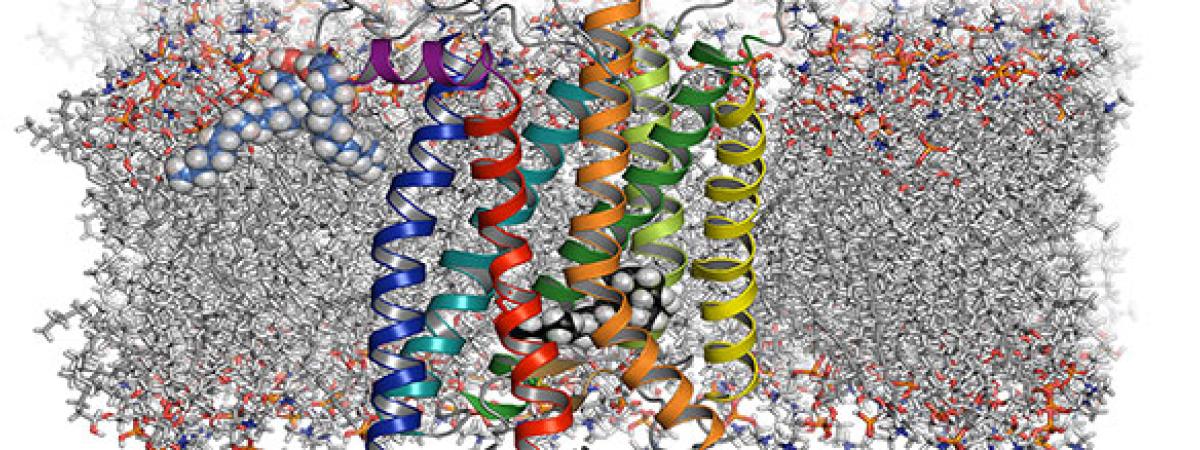
Surprisingly little is known regarding intra-cellular targets with which vitamin E interacts. We are studying the tocopherol transfer protein (TTP), which is mutated in ataxia with vitamin E deficiency (AVED) patients. Using in vitro and in vivo approaches, we aim to understand how TTP functions in order to gain insights into its biological role(s) and, in turn, into the mode(s) of action of vitamin E

(2) Does vitamin E function in modulating gene expression?
A few lines of evidence suggest that the physiological functions of vitamin E involve novel activities, such as stimulation of signaling cascades and modulation of transcriptional events. We aim to characterize the genomic and metabolic activities of vitamin E, utilizing expression- profiling and cell-biological approaches.


RECENT PUBLICATIONS
Morley S. Cacchini M. Zhang W. Virgulti A. Noy N. Atkinson J. Manor D. (2008) Mechanisms of ligand transfer by the hepatic tocopherol transfer protein. J Biol Chem[Epub ahead of print]

Valastyan S. Thakur V. Johnson A. Kumar K.  Manor D. (2008) Novel transcriptional activities of vitamin E: inhibition of cholesterol biosynthesis. Biochemistry; 47: 744-52.

Manor D. Morley S. (2007) The alpha-tocopherol transfer protein.  Vitam Horm.; 76: 45-65.

Kamynina E, Kaupinnen K, Duan F, Muakkassa N, Manor D. (2007) Regulation of the proto-oncogeneic Dbl by ubiquitin-mediated proteasomal degradation.  Molec. Cell. Biol.; 27(5): 1809-22.

Morley S. Wagner J. Kauppinnen K. Sherman M. Manor D. (2007) Requirement for Akt-mediated survival signaling in cell transformation by the dbl oncogene. Cell Signal; 19(1): 211-8.

Qian J. Atkinson J. Manor D. (2006) Biochemical consequences of heritable mutations in the alpha-tocopherol transfer protein.  Biochemistry; 45: 8236-42.

Nava P. Cecchini M. Chirico S. Gordon H. Morley S. Manor D. Atkinson J. (2006) Preparation of fluorescent tocopherols for use in protein binding and localization with the alpha-tocopherol transfer protein.  Biochemistry; 14(11): 3721-36.

Morley S, Cross V, Cecchini M, Nava P, Atkinson J, Manor D. (2006) Utility of a fluorescent vitamin E analogue as a probe for tocopherol transfer protein activity. Biochemistry; 45: 1075-81.


Danny Manor's PUBLICATIONS via PubMed

back to top of page