
case western reserve university

NUTRITION


  NUTRITIONAL BIOCHEMISTRY & METABOLISM

 
Program Overview
 

Students planning on pursuing an academic career that includes teaching and research in the Basic Science or Applied Components of Nutrition need to complete a Doctoral Degree.

The CWRU Ph.D. program in Nutrition is individualized to meet the goals of the student. Faculty members are readily available for in-depth consultation and guidance.  See 'Faculty Directory' to read about the research interests of our faculty members.

The graduate program includes courses, formal and informal seminars, and most importantly, the performance of original research. Major emphasis is placed on the research project. By the end of the first semester, the student chooses a research advisor from the participating faculty members. The student's interest is a primary factor in the choice of advisors, who provide research training in Nutritional Biochemistry/Metabolism, Molecular Nutrition and Applied Nutrition.

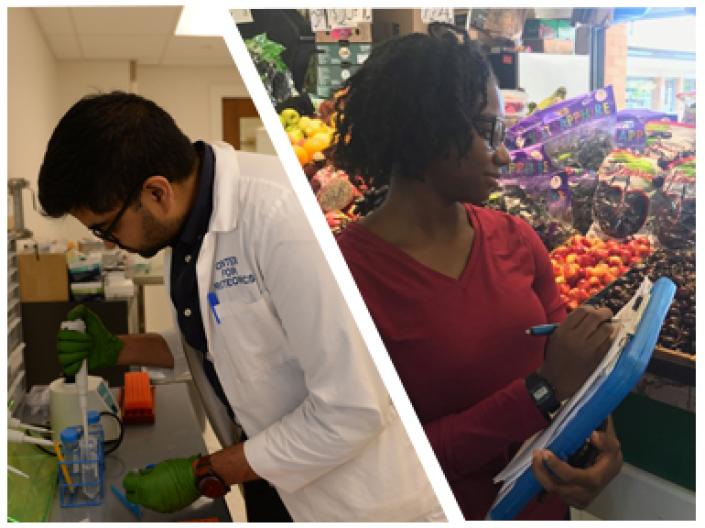
The department has laboratories equipped with Gas Chromatographs-Mass Spectrometers as well as animal laboratories and an organic chemistry laboratory.

Graduate students will also have completed studies in clinical settings through close cooperation with other departments and medical centers.


Degree Requirements & Curriculum


Upon admission to the Doctoral Program in Nutrition, Dr. Brunengraber (department's chair) will assign to the student a selected academic advisor from one of the doctoral-level faculty.

Completion of the following is required prior to starting doctoral coursework:

  1. M. S. in Nutrition (or equivalent). However, this requirement may be waived for the individual with exceptional academic records and research potential.

  2. Successful completion of a minimum of 30-hours of graduate coursework.

  3. One academic year in full-time residence.

  4. Successful completion of a written and oral examination to qualify for candidacy.

  5. Preparation of a research proposal and subsequent acceptance of such proposal.

  6. Dissertation Research (NTRN 701).

  7. Formal presentation of dissertation research at a department seminar.

  8. Oral defense of the dissertation.
 
 
  PhD Application  
  Prospective Ph.D. students should consult with: Dr. Edith Lerner at exl2@case.edu

or

Dr. Henri Brunengraber at hxb8@case.edu

or

other faculty members from the Department of Nutrition faculty directory prior to completing the application.


Biomedical Science Training Program
(link)


For graduate students in the Ph.D. program, this Nutrition Training Program at CASE is broad-based, and interdisciplinary in all aspects of metabolic processes.

Training is provided by members of the faculty whose interests are in nutrition, biochemistry and molecular biology. They are engaged in investigations ranging from sub-cellular studies of metabolic regulation to investigations in humans. See faculty directory for research interests. The training faculty have their principal appointments in the Departments of Nutrition, Biochemistry, Molecular Biology and Microbiology, Medicine, Pediatrics and Pharmacology.

All training faculty have well-established research programs supported by research grants. The faculty believe that there are major contributions, beyond those already achieved, that can be made to our understanding of the molecular basis of metabolic processes. They especially believe that the training of individuals towards this goals should utilize an integrated basic science approach.

All first-year Ph.D. students take a comprehensive core course in Cellular and Molecular Biology. This year-long course consists of six hours of lecture material each week, and is taught cooperatively by several science departments. In addition to the Core Curriculum lectures, first-year students take courses in nutrition and participate in seminar programs and journal clubs. Most of the remaining courses required by this program will be taken during the second year.

A prime criterion for acceptance of potential trainees to the program is their desire to pursue an academic career in metabolic and nutritional research, or work in an industrial setting.

Full-time graduate students in this program have their tuition waived and receive a competitive stipend.

For more information contact Dr. Maria Hatzoglou at mxh8@case.edu   


TOP