
Visit the Office of Graduate Education for info on our many doctoral programs and the graduate education application process at the School of Medicine.
Visit the Office of Admission for info on application process, financial aid, and student life.
Use our secure online giving form to make your gift to Case Western Reserve University now.
Find out how you can Take Three Steps to make a difference at Case Western Reserve University.
Visit Case Western Reserve University's uniquely urban campus, located in the heart of Cleveland's cultural hub, University Circle. Plan your trip:
...at the School of Medicine
Search for School of Medicine faculty in our Faculty A to Z or search their research interest through the Faculty Research Interest Directory.
Look up other people in the University Directory.
During the first year, you will embark on lab rotations with research faculty, participate in coursework with your peers and then select the biomedical PhD program that fits you best. The program begins in July, and you're encouraged to arrive as early as possible so you can complete a research rotation before classes begin.
In the fall, most BSTP students take the coordinated Curriculum in Cell and Molecular Biology. The Curriculum in Cell and Molecular Biology courses meet each morning and include lectures, introduction to common techniques, small group journal discussion, and involves faculty instructors from most departments at the School.
Students with strong quantitative skills in physics or math but limited biology exposure may be guided instead to Cell Physiology courses (including PHOL 432, PHOL 456).
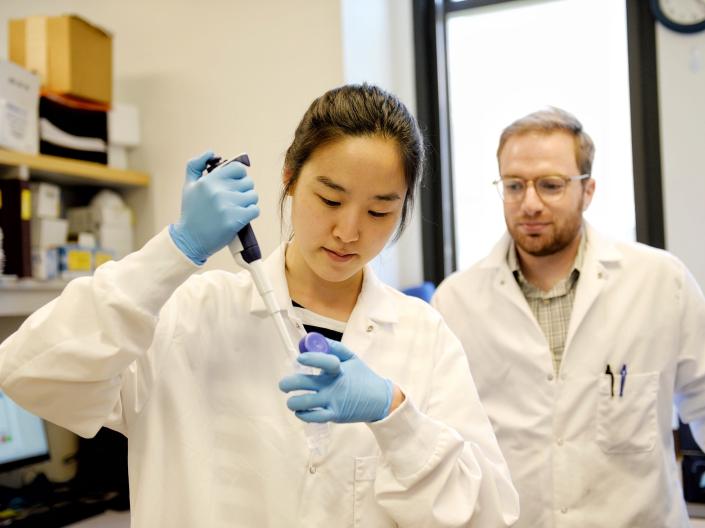
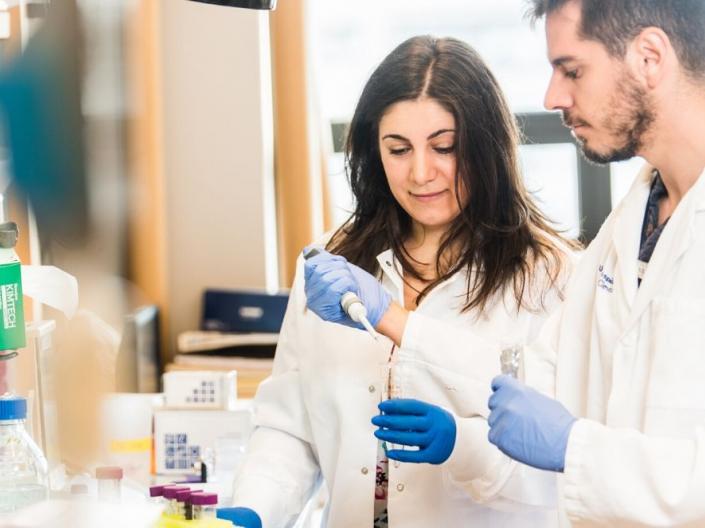
You'll complete a minimum of three rotations of at least 4-6 weeks each. During each research rotation, you'll spend at least 20 hours per week in a prospective mentor's laboratory, acquiring new techniques, learning about the lab's research areas, interacting with lab staff and trainees, and getting to know the faculty. While you're there, you'll do everything a student in the lab would do, including attending journal clubs, research seminars and lab meetings. This allows you to evaluate the research and environment that best suits your interests.
You'll choose a thesis advisor, and thus, a particular PhD program, in December of the first year. Your research interests are the primary factor in this choice. Faculty may be affiliated with several PhD programs at Case, allowing you even more flexibility. You’ll go on to complete the dissertation and coursework requirements of your chosen PhD program.