Research
1. Nanoconfined Ferroelectric Polymers and Their Applications in High Electric Energy Storage
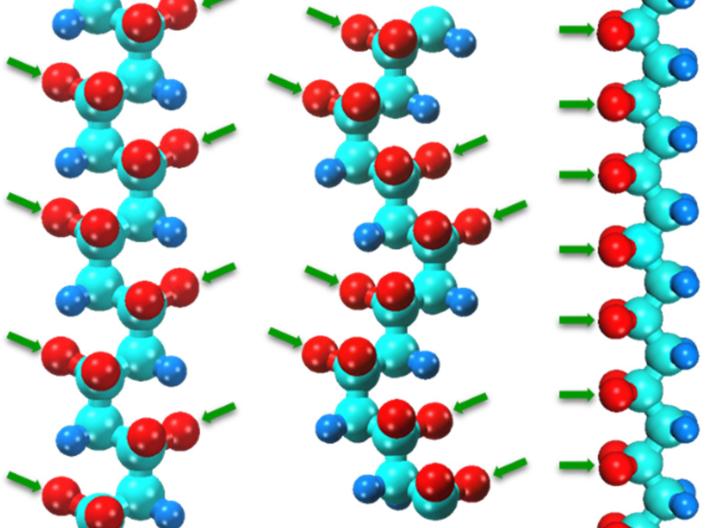
In analogy to crystallization, ferroelectric transition is a cooperative event among dipoles and ferroelectric polydomains. This transition can be dramatically changed by confining it into a very small isolated domain. One possible result of the confinement is the relaxor ferroelectric behavior, which has attracted substantial attention in research because of their unique physical properties, such as large electrorestriction, high electric energy storage, and large electrocaloric effect. Our approach to confine polymer ferroelectricity includes both chemical and physical confinements, and can be divided into 1D, 2D, and 3D. Rational materials design, synthesis, and structural/electrical property characterization will be used to study the nanoconfined polymer electricity.
2. Amphiphilic Dendrimer-Like Star Polymers (DLSP) for Diagnostic and Drug Delivery

Molecular targeting is of great interest for diagnosis and therapy, particularly in oncology. The challenge lies in the design of nanoparticles (NPs) that specifically and differentially bind with targeted cells and release loaded drugs over an extended period to achieve a clinical response. In this research, an amphiphilic DLSP is synthesized using biodegradable and biocompatible components, such as polylactide or polyesters. The prepared DLSP is conjugated with an aptamer which can specific bind with targeted cells for targeted diagnostic and drug delivery. These biomaterials are thus so-called artificial antibodies. Research include rational design and synthesis of polylactide dendrimer-like polymers, characterization, conjugation with aptamers, biodegradability and biocompatibility studies, and drug encapsulation and release.
3. Discotic Liquid Crystals and Their Supramolecular Self-Assembly
Thermotropic Liquid Crystals
 
We are interested in synthesis and characterization of a range of discotic liquid crystals and semiconducting materials. We seek to achieve fundamental understanding of the structure-property relationship. The ability of obtaining segregated stacks ofcovalent-linked p-type and n-type moietiesin one molecule is crucial forthe molecular organic electronics. We aim to achieve nanophase separation between the p- and n-moieties by designing and synthesis of aseries of discotic supermolecules.
Lyotropic Liquid Crystals
 
We are also interested in synthesis of asymmetric discotic liquid crystals (DLC) with immiscible polymer side chains. We aim to understand fundamental physics of microphase separation in hydrogen-bonding assisted supramolecular self-assemblies in novel DLC. Columnar liquid crystalline (LC) nanostructure and morphology are expected due to the p-p stacking of disks, and spontaneous curvature could also be induced by immiscible polymer side chains therefore to form a variety of morphologies, such as vesicles, nanotubes and nanosprings.
Our research is supported by:

|