
 Emeritus Professor of Chemistry

216.368.3668 gdm2@case.edu Millis 225D
Interests: Analytical Chemistry, Physical Chemistry, Bioenergetics, MRI, Magnetic Resonance of Mitochondrial Metabolism
Licentiate (summa cum laude), U. of Bucharest, 1951
G. Spacu Award, Romanian Academy of Sciences, 1966
PhD, Case Western Reserve University, 1971
Visiting Professor; Paris, Marseille, Ljubljana, Kyushu (Fukuoka)
Interacademy Exchange Fellow, National Academy of Sciences, 1982, 1990
John S. Diekhoff Award for Distinguished Teaching, CWRU 1991
Honorary Member, Romanian Academy, 1995
Doctor h.c., Polytechnic U., Bucharest, 1996
George Emil Palade Award for Scientific Achievements, 1999
Doctor h.c., Carol Davila School of Medicine, Bucharest 1999
Fellow of the International Society for Magnetic Resonance in Medicine (ISMRM)
 Mateescu CV 2015 (pdf)
In vivo Deuterium, Oxygen-17, Proton and Phosphorus Magnetic Resonance Imaging and Spectroscopy: Mitochondrial Metabolism
Most of the energy needed for all life processes is produced by mitochondria, cell organelles called “the power plants of living bodies.” There, the fuel, hydrogen ions provided by food metabolism, is “burnt” in the presence of oxygen, provided by respiration of surrounding air. This reaction, which results in formation of water, yields a large amount of free energy that, in turn, is stored in the form of ATP (adenosine triphosphate). Highly complex enzymatic processes regulate metabolic water and ATP formation. These oxidative phosphorylation (OXPHOS) reactions are strongly coupled. The coupling and, implicitly, the rate of mitochondrial metabolism, depends not only on the need of energy, but also on a number of normal and pathological conditions ( e.g., pressure, temperature, drug administration and disease). Of the latter, degenerative diseases such as Alzheimer and Parkinson, as well as aging, are associated with mitochondrial DNA mutations which lead to defects in the structure and function of the mitochondrial enzymes.
Professor Mateescu’s group is pioneering a new bioanalytical method for in vivo studies of mitochondrial metabolism, namely concerted 17O/31P MRI and MRS (MR imaging and spectroscopy). Research projects include systematic studies of the effects of various agents on the OXPHOS in carefully selected animal models. The ultimate goal is to establish a powerful tool for monitoring drug poisoning, diseases, and their treatment.
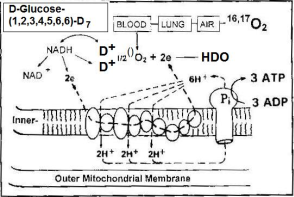
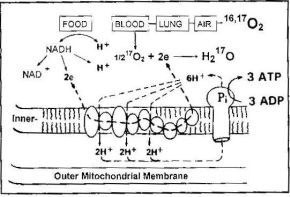
Potential and Limitations of Oxygen-17 MR Perfusion Measurements presented at the ISMRM Workshop on Cerebral Perfusion, March 2004, Venice, Italy.
The structure and properties of water
The interaction of water monomers, trapped in hydrophobic solvent cages, with a wide variety of molecules can be characterized in considerable detail by means of high resolution 170 NMR and vibrational spectroscopy. Recently, a most remarkable differentiation between the reactivity of water monomers and bulk water was experimentally discovered. Molecular species at liquid-liquid interfaces can also be characterized. This new avenue will contribute to the understanding of the role of water in life processes and a better understanding of the chemical basis of MR imaging. Isolation and characterization of species of fundamental importance in chemistry, such as OH–, OD– and isotopomers of H30+ and H4O2+ constitute fascinating projects.
During his/her research the student will gain a thorough theoretical and experimental knowledge of NMR (including 2D NMR).
Selected Publications
- Book: 2D NMR: Density Matrix and Product Operator Treatment. Prentice Hall, NJ, 1993, 195 pages.
(Out of Print) (Online version) - Functional Oxygen-17 Magnetic Resonance Imaging and Localized Spectroscopy, Adv. Exp. Med. Biol. 2003;510:213-218.
- Mitochondria and NMR: New Insights at High Fields, ENC (Experimental NMR Conference) 30. 104a, 2002.
- 17O and 31P Magnetic Resonance Imaging and Spectroscopy: In vivo Investigations of Cell Bioenergetics, Spatially Resolved Magnetic Resonance, P. Blumler, B. Blumich, R. Botto, E. Fukushima (Eds.), Wiley-VCH, 1998, 421-429.
- In vivo O-17 Magnetic Resonance Spectroscopy: Determination of Temperature Effects on Metabolic Rates (Q10 factor), Adv. Exp. Med. Biol. 1997, 585-590
- Concerted 17O/31P Magnetic Resonance Spectroscopy: A Novel Approach for in vivo Correlation of Oxygen Consumption and Phosphate Metabolism. Adv. Exp. Biol., 1994, 361, 234.
- Interleave 17O/31P MRS: Novel Approach for In Vivo Determination of Defects in Oxidative Phosphorylation (Mitochondrial Metabolism). Proc. Soc. Magn. Reson. Med., 1993, 12: 110. (online PDF)
- Oxygen-17 and Proton Microscopy in Materials Analysis, with G. Yvars and R. Kinsey. Advanced Tomographic Imaging Methods for the Analysis of Materials. J. Ackerman, (Ed.); Mat. Res. Soc. Symp. Proc. 1991, 217: 61-66. (online PDF)
- From Materials Testing to Brain Function Testing. Spectroscopy International, 1991, 3, 14-18.
- Combined 17O/1H Magnetic Resonance Microscopy in Plants, Animals and Materials: Present Status and Potential. In Synthesis and Applications of Isotopically Labelled Compounds, T.A. Braille and J.R. Jones, Eds. Elsevier, Amsterdam, 1989. (online PDF)
- Water, Ions and O-17 Magnetic Resonance Imaging. In Water and Ions in Biological Systems. Lauger, Packer and Vasilescu, Eds; Birkhauser: Basel-Boston, 1988, 239-250.
- Oxygen-17 Magnetic Resonance Imaging. SMRM Sixth Annual Meeting, New York City, 1987. (online PDF)